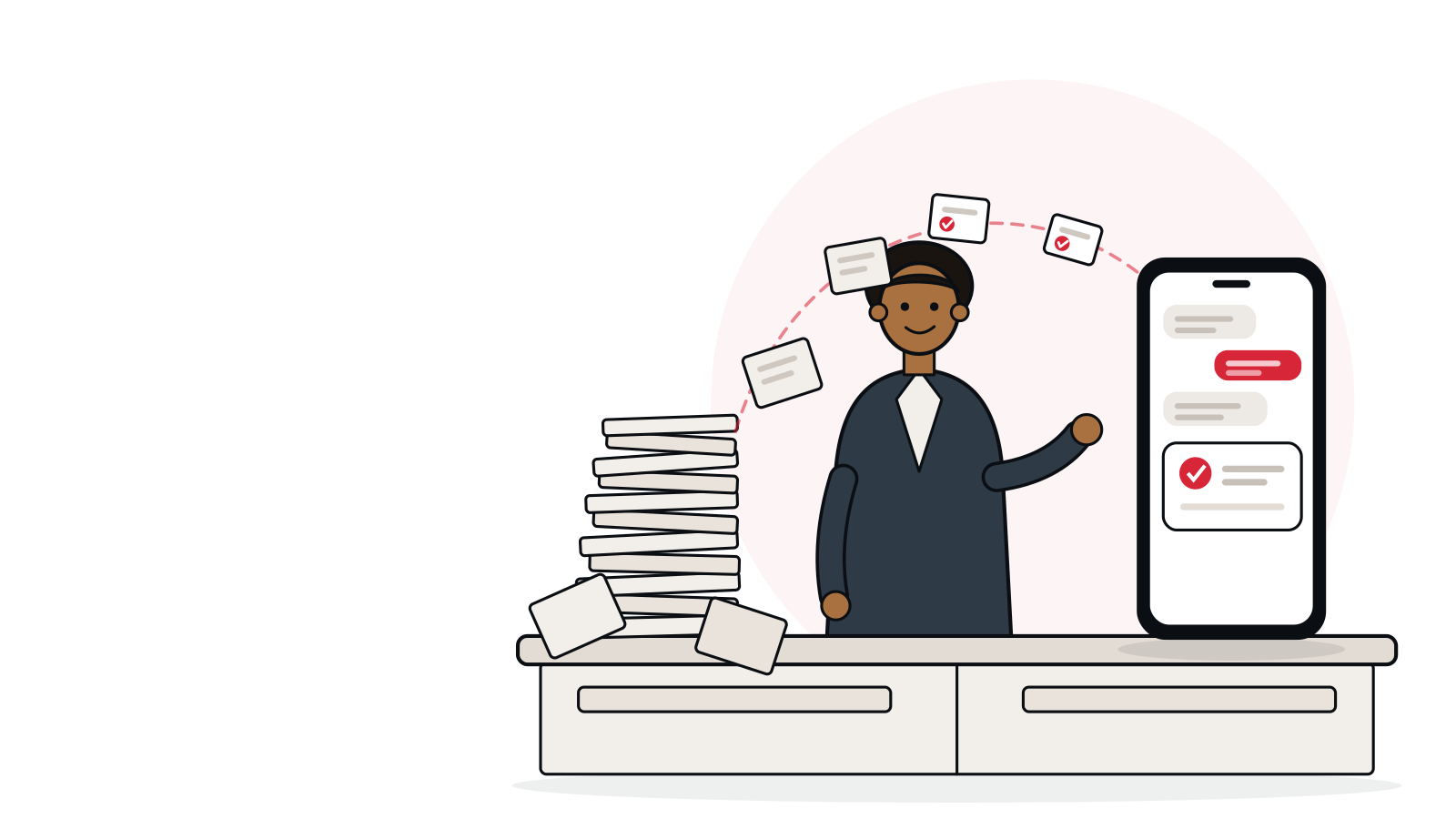
A borrower in Chitungwiza wants a top-up on her loan. She opens WhatsApp and sends a photo of her latest payslip to Tafadzwa, the loan officer who helped her last time. It lands on his personal phone, between a family group chat and a photo of his son's school report.
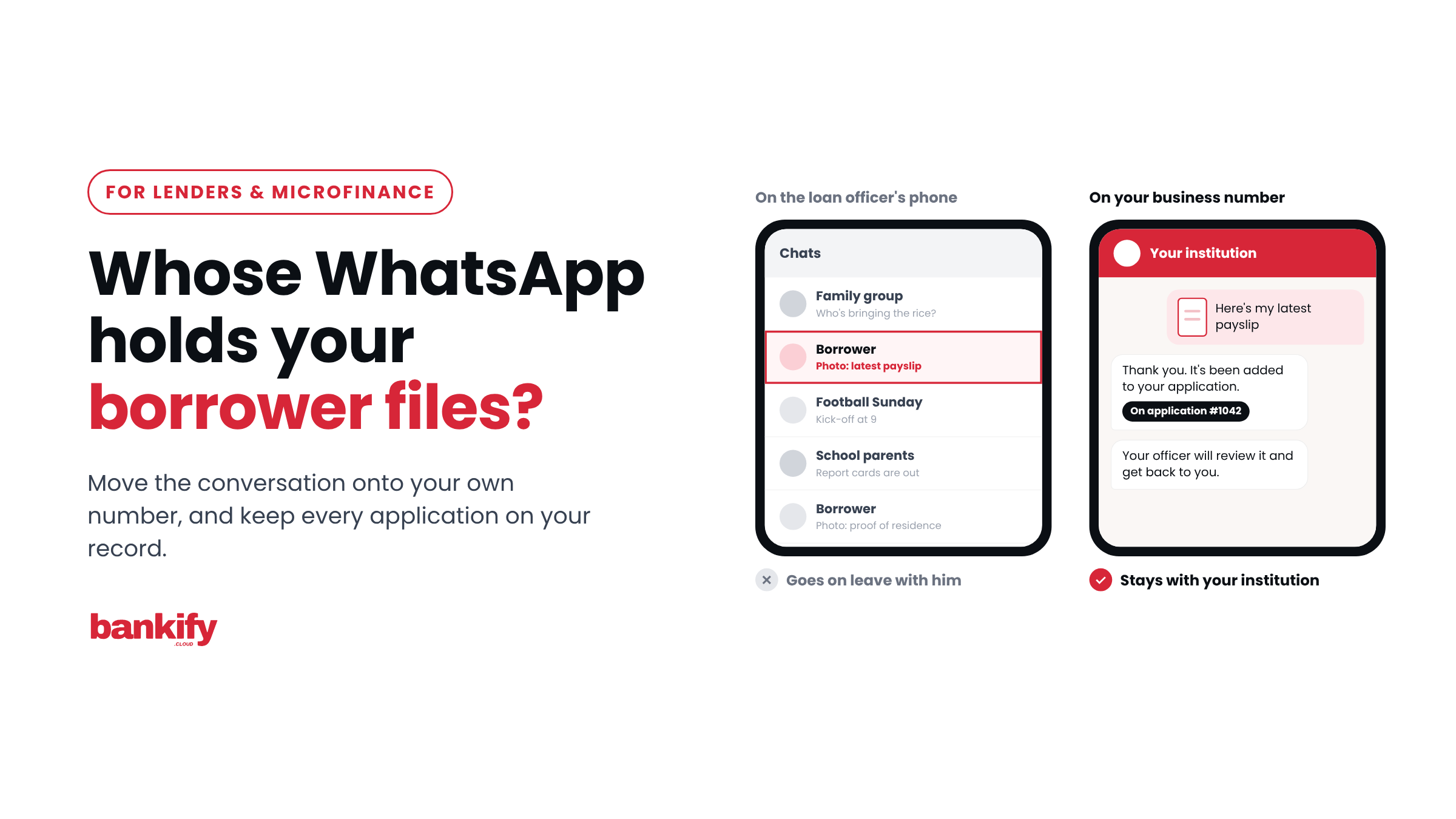
If your loan officers collect payslips, IDs and proof of residence on their own WhatsApp, your institution already runs a digital channel. Borrowers like it because it's quick and familiar. The trouble is where it runs: on phones your institution doesn't own. When Tafadzwa goes on leave, the conversation and the payslip go with him. Whoever covers his desk starts from nothing, and the borrower has to explain herself again.
Nobody else can see those conversations either. Your credit manager can't see which borrowers are waiting for an answer. Your compliance officer can't see what was asked for or what was sent. And you can't see what your institution is telling its customers, one personal chat at a time.
Moving that conversation onto your own WhatsApp Business number keeps everything borrowers like about it, puts every application where your team can see it, and turns photos on staff phones into complete files your institution keeps.
What the shadow channel looks like
When applications arrive on personal phones, the documents and the decisions about them sit outside your systems.
What happens when files live on staff phones
A gallery, not a file
Payslips and ID photos sit among personal pictures, with nothing tying them to an application.
A record you don't control
The messages, timestamps and photos stay on a phone that belongs to the officer.
Typed in again
Every name, number and amount is keyed into the loan system by hand.
Leaves with the officer
When an officer changes phones or moves on, the documents go too.
Each of these is manageable on its own. Together, they mean the file you would hand an inspector, an auditor or a funder is scattered across phones you can't reach.
Why it matters when someone asks for the file
Zimbabwe's Money Laundering and Proceeds of Crime Act treats anyone who lends as a business as a financial institution. Sections 15 and 16 require you to verify a customer's identity with an identity document before you establish the relationship. Section 24 requires you to keep account files and copies of identity documents, and to make them available to the Financial Intelligence Unit and other competent authorities on a timely basis.
5 years
Money Laundering and Proceeds of Crime Act Chapter 9:24, section 24(2)(a).
A photo on a loan officer's personal phone is hard to produce on a timely basis. Five years after the borrower's last loan, and perhaps two phones later, it's harder still.
Move the conversation, keep the borrower's habit
Your borrowers already know how to send a photo on WhatsApp. Self-service keeps that habit and changes the number they send it to.
On the officer's phone
- Officer's personal number
- Photos in a gallery
- Typed in by hand
- Leaves with the officer
On your business number
- Your WhatsApp Business number
- Documents on the application
- Captured once
- Stays with you
Loan officers keep their relationships with borrowers. When a borrower messages an officer's own number, the officer replies with your business number, and the application starts there.
What each application carries in Bankify
In Bankify, every application that arrives on your business number carries its own record, from first message to decision.
What each application carries
A reference number
Every application gets one, and it travels with the application into your loan system.
A timeline that can't be rewritten
Each step is recorded and attributed to the customer, an officer, the assistant or the system. New events are added; earlier ones stay as they were.
A KYC snapshot
The customer's details and documents are saved as they stood when the application was submitted.
Freshness checks
Documents other than the national ID are flagged once they are more than 90 days old.
A person's decision
Document checks pass or flag an application, and your officer approves it.
The application then moves to your loan system with its reference number, so the file your officer reviewed is the file your institution keeps.
Five questions to ask about your current channel
You can check where your files really live in an afternoon:
- Where do payslips and ID photos arrive today, and on whose phone?
- If an officer went on leave or left tomorrow, which conversations and files would go with them?
- For any borrower, can you show who received their documents and when?
- How many times is each application typed in?
- Could you produce a borrower's ID copy five years after their last loan?
If the answers point to personal phones, your digital channel is already running. Bringing it onto your own number puts it on your record.
See the back office for yourself. Book a 15-minute walkthrough of how applications, documents and decisions are recorded in Bankify. If you missed the first article in this series, start with Your Branch Closes at 4:30. Your Borrowers Don't.
Next in this series: Your Next Branch vs a Digital Front Door: Run the Numbers.