It's 7pm on a Thursday. A woman who runs a poultry project in Murewa has spent the evening working out whether a loan would cover feed for her next batch of chicks. She's decided. She wants to apply.
Your office closed at 4:30. It's in Harare, a bus fare and most of a day away. By Monday she may have borrowed from someone else, or decided it isn't worth the trip.
If you run a microfinance institution with one, two or three offices and borrowers spread across the provinces, you know this borrower. What you don't know is how many of her there are. She never shows up in your numbers, because she never applied.
Digital self-service gives her a front door she can reach: open at any hour, from wherever she is, on the phone already in her hand. For you, it means lending further than your branches reach, without opening another one.
What digital self-service means for a lender
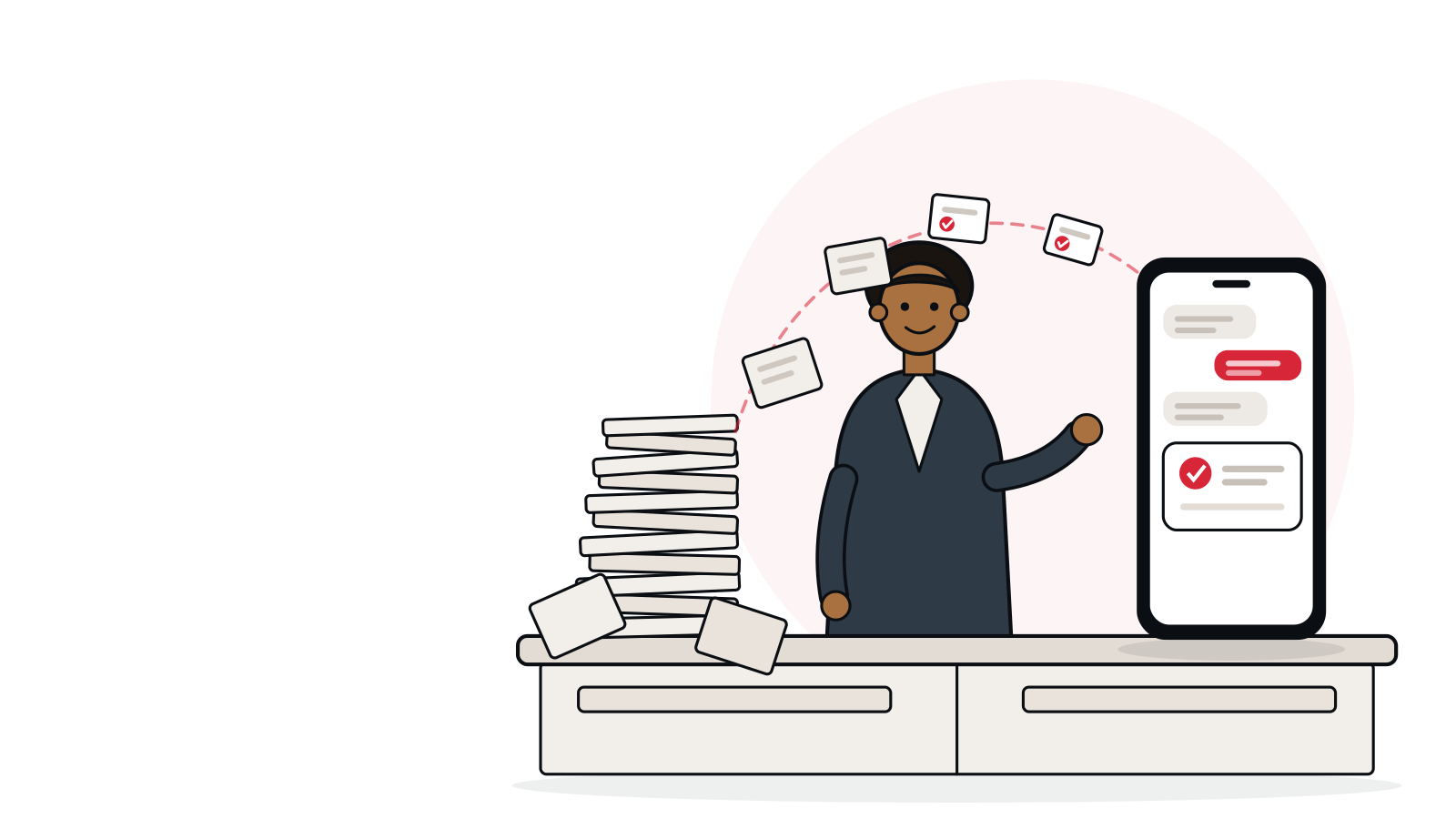
In lending, self-service means the borrower does the data capture and your team does the deciding. Much of the work in an application today is collecting things: names, ID numbers, documents, payslips, bank details. Then someone types it all in. Self-service moves the collecting onto the borrower's phone, guided by an assistant that speaks for your institution.
Applying at the branch
- Travel to the office
- Queue in office hours
- Fill in the form
- Told to come back
- Officer re-types it
Applying by self-service
- Message your number
- Photograph the documents
- Confirm with a PIN
- Officer decides
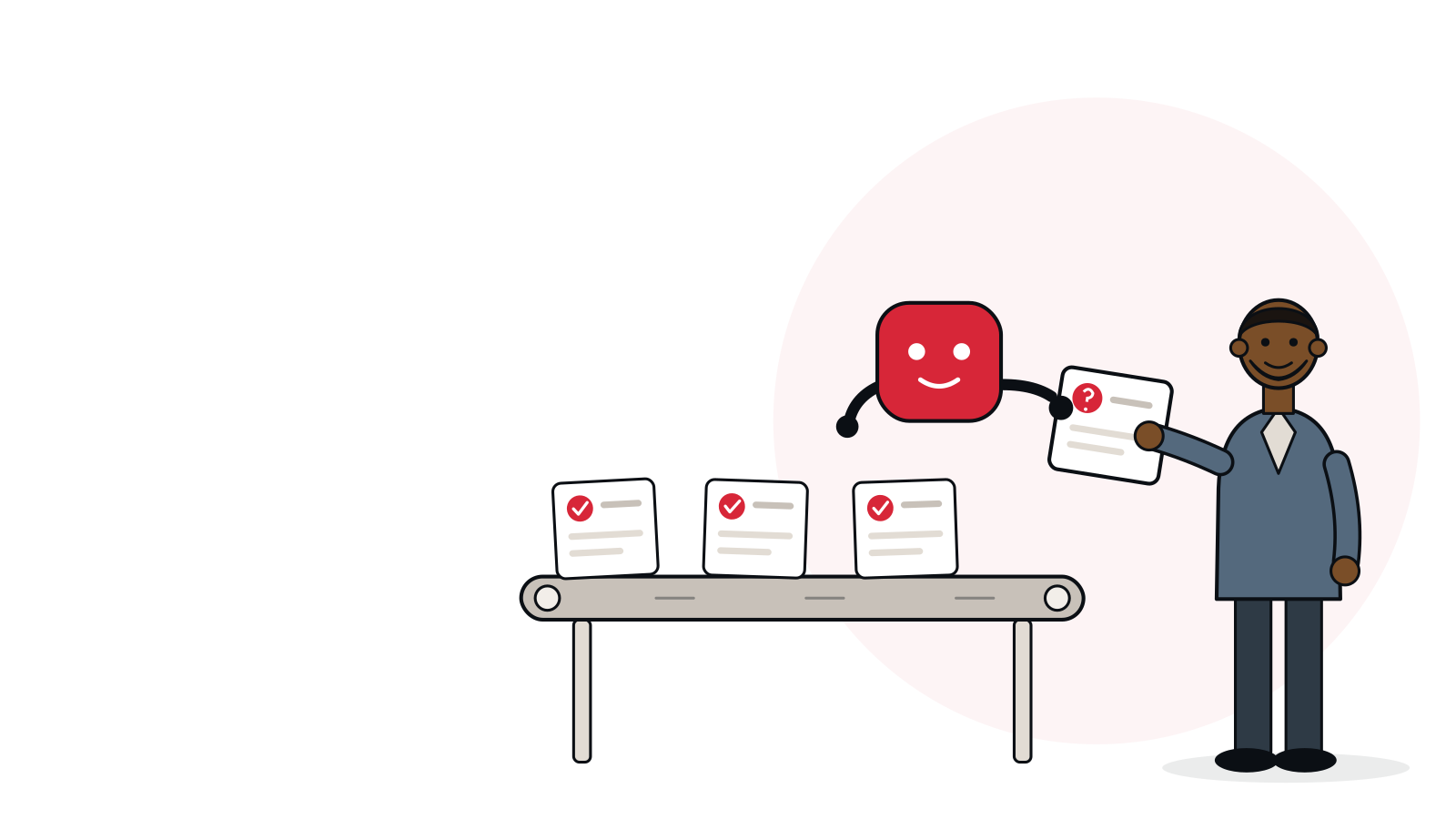
Self-service takes over the chasing. Your loan officers keep the judgement.
Three kinds of demand you're probably missing
Loan demand leaks away at three gates, before an application is ever made. Those borrowers leave no trace in your reports.
Where loan demand leaks
Time
A branch open 08:00 to 16:30, five weekdays and no weekend hours, is open 42.5 of the week's 168 hours. For the other three-quarters of the week, the door is closed.
Distance
61.4% of Zimbabweans live in rural areas. For a rural borrower, applying in town can cost a bus fare and a day's trading.
Paperwork
A borrower told to come back with a proof of residence or a payslip has to make the trip twice.
The time gate is simple arithmetic. Assume five weekdays from 08:00 to 16:30 and no weekend hours: that is 42.5 open hours out of 168, about a quarter of the week. The distance gate comes from ZimStat's 2022 census preliminary report, which found 61.4% of the population living in rural areas. A small branch network in town leaves many of them a long trip away, and each new office only shortens that trip for one area.
What self-service covers, from first message to decision
A borrower can get from "I want a loan" to a complete application, ready for your team to review, in four steps and without visiting your office. Here is how it works in Bankify.
Enrol and complete KYC
She agrees to your privacy terms, then photographs her national ID and proof of residence in the chat. Each document is read and checked as it arrives, and anything that needs a closer look is flagged for your officer. She sets a PIN.
Apply
She picks a product, enters the amount and term, and adds what that product needs, such as a payslip.
See the terms and confirm
She sees the interest, fees, monthly payment and total repayment in the chat, and confirms her application with her PIN.
Track it
One message shows every application she has open, with its reference, amount and status.
Here is step one from the borrower's side.
Step one, as the borrower sees it
Boon Financial Services is a demo lender, and Tendai is an illustrative borrower. Your borrowers would see your institution's name, and the assistant can carry a name of its own.
What your team sees
Every application lands in a review queue with its documents attached and the channel it came from recorded. An officer reviews it and decides. Approved applications can then be passed to your loan management system through an integration set up for your system, so nobody types them in again.
How self-service fits the system you already run
Borrower
Any hour, any place
WhatsApp, Messenger or web chat
Bankify
Document checks and loan terms
Review queue
Your officer decides
Your LMS
Via an integration set up for you
The decision stays with your people. In Bankify, a document check passes or flags an application, and your officer makes the call.
Grow without opening another branch
The strongest reason to offer self-service is growth: reaching new districts with the branches and staff you already have.
- Reach borrowers outside your branch footprint, in districts where another office would be expensive or impractical.
- Accept applications after office hours, so evening and weekend interest is waiting for your team on the next working day.
- Cut manual data capture and document chasing, because the borrower sends her own details and documents.
- Let your existing loan officers handle more applications, since they start from a file instead of a blank form.
- Keep credit decisions with your people. Self-service collects the application; your officers decide.
Why now
Your borrowers already have phones and already use WhatsApp, and across the region, borrowing by phone is now common.
16.2M
active mobile connections in Zimbabwe
Equal to 95% of the population. Many people hold more than one SIM (DataReportal, end 2025).
#1
WhatsApp's rank among mobile internet platforms
POTRAZ figures for the first quarter of 2026.
~60%
of formal borrowing in Sub-Saharan Africa goes through mobile money
Sub-Saharan Africa, 2024 data (World Bank Global Findex 2025).
WhatsApp was the most-used mobile internet platform in Zimbabwe in POTRAZ's figures for the first quarter of 2026 (ITWeb Africa). Zimbabwe had 16.2 million active cellular mobile connections at the end of 2025, equal to 95% of its population. Actual internet use is much lower: about 6.54 million people, or 38.4% of the population, were internet users (DataReportal, Digital 2026: Zimbabwe).
Across Sub-Saharan Africa, 12% of adults borrowed formally in 2024, and 7% of adults borrowed from mobile money providers. That is nearly 60% of all formal borrowing in the region (World Bank Global Findex 2025, as reported by Ecofin Agency). Borrowers across the region have taken readily to borrowing on a phone.
Digital channels can also be cheaper to run. The McKinsey Global Institute estimated that serving a customer through a mobile money account can cost up to 80–90% less than serving them through a branch (Digital Finance for All, 2016).
What stays the same
Self-service adds a front door alongside the ones you already have.
- Many borrowers are still offline. Only 38.4% of the population were internet users at the end of 2025 (DataReportal). Keep your branch and your field officers. Staff can capture an application on a borrower's behalf, and it lands in the same queue to the same standard.
- Relationships still matter. Collections, field visits and group meetings are still done in person. Self-service frees up time for that work by taking the form-filling off your officers' desks.
A question worth asking this month
How many applications did we not receive last month?
You can estimate the number in an afternoon:
- Ask your loan officers how many enquiries reach their personal phones after 4:30 or at weekends.
- Count the borrowers who were told to "come back with" a document, and how many came back.
- Put your current borrowers' home areas next to your office locations. Look at how far the furthest ones travel, and at the districts with no borrowers at all.
If any of those answers surprises you, that's the demand self-service is built to catch.
See it for yourself. Request a demo to watch a customer go from first message to a complete application, ready for your team to review, on WhatsApp, Messenger and web chat. Or try the demo assistants in How Lenders Can Use WhatsApp for Loan Applications.
Next in this series: Your Loan Officers Already Run a Digital Channel. It Just Isn't Yours.